Déclaration de récolte
The tendency toward the centralization of each and every thing takes the most varied forms and accretes numerous rationalizations and public narratives.
In the chaotic space of the current economy, a process of centralization and structural degeneration is underway. This process is driven by systems-engineering causes. Its mounting intensity depends on human decisions almost not at all.
Yet the only players who tendentiously win are those who work in service of the process dominant in the economy. Those who try to go against it fly off the track.
People explain to themselves somehow why they work in service of this on the whole unsympathetic and destructive tendency. In particular, they invent assorted appealing ideologies.
Today the most developed cultures explain their suicidal nosedive into the abyss of total integration as a striving toward the socialization of society. People tell themselves that they are building a “welfare state.”
The welfare state is meant to keep watch over business, not letting it exploit the mass man however it pleases. Surveillance of this kind requires a sort of panopticon. A machine with an observer at the center and, around the perimeter, cells holding commercial enterprises.
The fewer cells the overseer has to watch, the more effective the oversight turns out to be. And consequently the welfare state will favor the survival of precisely the large players.
Once the state has taken it upon itself to protect the citizen from business, in time it will go about doing so on an ever greater scale. The citizen, it is supposed, should meanwhile be getting better and better off. And he really does get better and better off — in everything except business and employment. For jobs are given by that very business from which the state so effectively shields the individual.
It is curious that, over time, officials inevitably become so carried away with their restrictive activity that they begin most vigorously to regulate the citizen’s private life as well. From banning night shifts in shops to regulating, say, a person’s sex life or the media content he consumes, the distance is altogether tiny.
There is no need at all to outright forbid small business to exist. There are two very effective pedals that make a small company’s life unbearable. These are taxes and certifications.
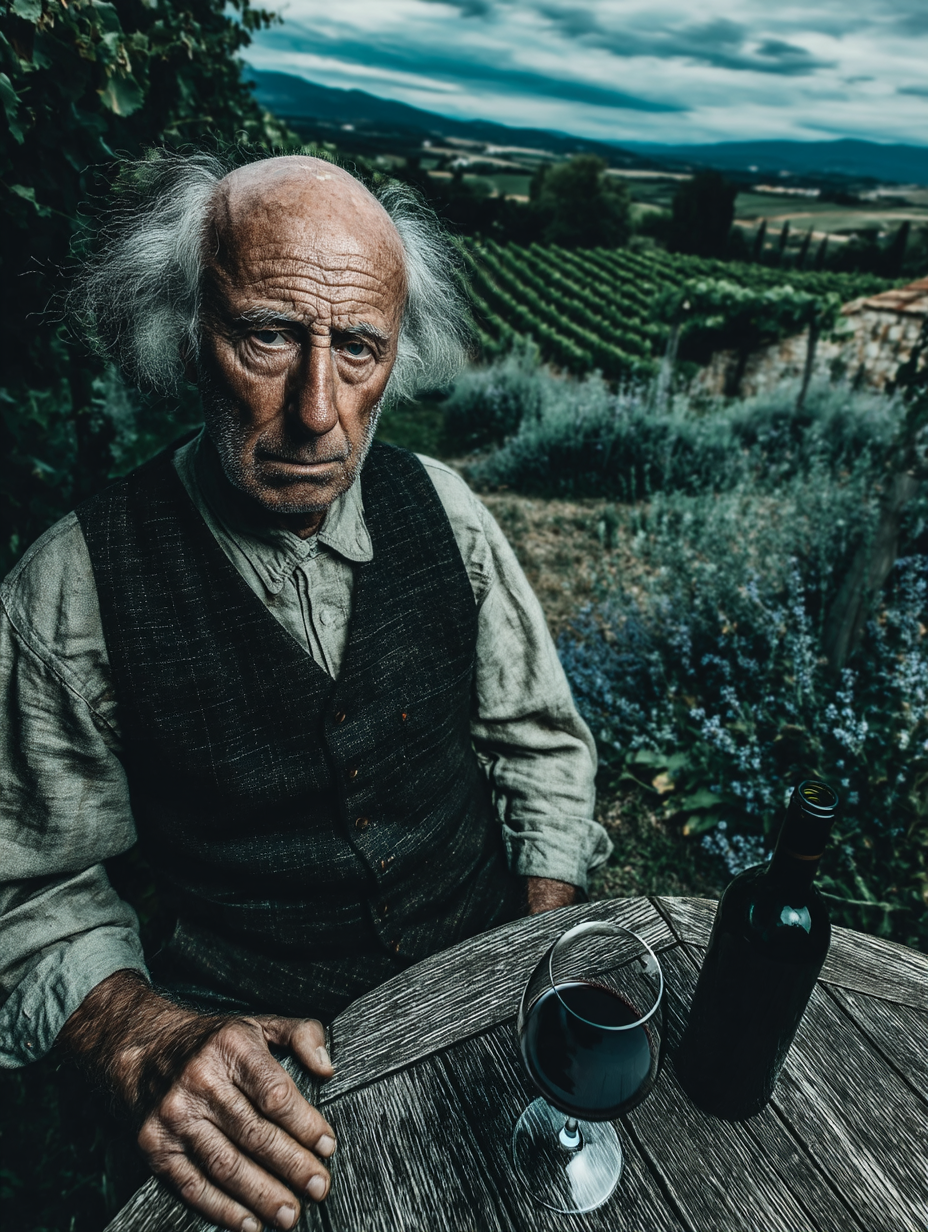
Suppose you are a French winegrower. Several generations of your forebears produced wine and sold it in the local bar and in their own cozy little shop.
But now the welfare state has arrived. From now on, if you do not wish to break the law, you will have to acquire the following certificates and permits.
Registration of the vineyard. Every plot must be entered into the Casier viticole informatisé (CVI).
Annual declarations. Each year you will be obliged to submit a harvest declaration (déclaration de récolte), a production declaration (déclaration de production), and a stock declaration (déclaration de stock).
Excise status. Wine is an excisable good. To produce and store it under suspended excise duty, the winegrower registers as an entrepositaire agréé (authorized warehouse keeper) with customs and receives a corresponding number.
Right to an appellation. If the peasant wishes to sell his wine not simply as “Vin de France” but under a protected appellation, the oversight of the INAO and a certifying body is added.
Registration as an agricultural producer. Without this registration you will have no right to issue invoices.
The label on bottles for sale. A simple bottle label is a separate document whose content is governed by separate legislation.
All this solicitude on the state’s part very powerfully encourages simple peasant winegrowers to hand their harvests over to cooperatives, and the cooperatives, in their turn, to join up with large networked wine companies.
Taxation works more crudely and more simply. Across northern and central Europe the tax rate varies somewhere between a half and a third of income.
Such a tax rate sharply raises the level of income at which it becomes worthwhile to engage in private enterprise at all. If, living, say, in Denmark, you earn 100,000 euros a year, the tax taken off them will come to somewhere in the region of 45,000 euros. That leaves 55,000 a year. On that money one can live very comfortably somewhere in Southeast Asia. But not in Denmark.
Large enterprises bear a high rate of taxation considerably more easily. If you have an annual income of two million dollars, then the half of it left over after taxes is still a whole million.
What is more, every large corporation has special departments occupied exclusively with optimizing tax losses. To pay less tax, large corporations move their money abroad. To places where no welfare state with its merciless taxation exists at all.
Naturally, a company moves only part of its profit into those distant and often quite dangerous lands. From those who hide too large a share of their profit, the state takes away the little locket with the elixir of immortality, and thereafter such a corporation is done for.
That is, a company will move into various thievish and criminalized countries exactly as much money as it can move without upsetting the state in the process.
The scheme already sketched is a veritable infernal web, made up of needless and dangerous ties. But the real maw begins there, where the money saved from all-devouring taxation goes. This money will flow to territories controlled by plutocratic, criminal social machines parasitizing on the problems of the first world.
Fleeing taxes, the financial brook plunges into a genuine cloaca. Into a fetid swamp where dishonesty, aggression, and lawlessness reign.
It goes without saying that this money will increase the amount of violence and social injustice. Moreover, these financial flows give rise to “dangerous liaisons” in the traditional sense of the phrase already.
In effect, the mechanism described creates ties between the leadership of large companies and full-fledged criminal kingpins. Drug traffickers, gangsters, deranged dictators.