Ch 24: The Second of 31
~
(David)
I’ve already spent too much time reading about this “Black Abbot”, Trithemius.
I keep reminding myself that I need to get on with finding solutions to the practical problems in my life, problems that are trying to kill me in fact, rather than luxuriating in the complex ambiguity of Trithemius.
I don’t recall finding Trithemius quite this fascinating when I learned about him back at the Academy, by way of a three-sentence summary.
This unhurried kind of thinking helps me arrive at insights that tend to help later on. Sometimes lingering on a train of thought for a bit too long, almost until the original question is forgotten, causes answers to present themselves in that pre-conscious way, like dreaming. Answers suddenly just announce themselves, reminding me of the question I was asking.
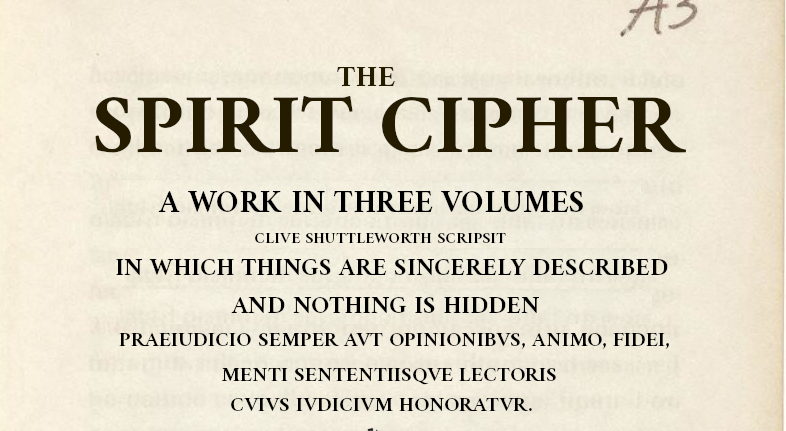
I think, but can’t be sure, and maybe it doesn’t even matter, that the ongoing “controversy” about Trithemius stemmed from the inability of the modern, post-Enlightenment Western mind to understand the typical human mind of the Renaissance or Early Modern period. In the earlier time there was no conflict between science and religion, between magic and philosophy. Disciplined, responsible Western inquiry about the nature of reality resorted as a matter of course to God, the Bible, the Church (which was also government in the earlier period), the spiritual realm, astrology, astronomy, magic, philosophy, mathematics and geometry — all at once.
This is evidenced, I think, by Trithemius’s insistence that his magic was “natural,” not “black” or demonic. He did seem to acknowledge that marvels could be produced through this “naturual” magic, with either angelic or demonic assistance.[2] He would have spoken of a universe consisting of God and thousands of angels and demons in the same breath as he discussed new discoveries in mathematics, philosophy, and cryptography. It was all scientific or philosophical or religious inquiry, simultaneously, using the best available technology. It may be impossible for the modern human mind to conceive of this without a feeling of cognitive dissonance.
Maybe, in a modern context, this cognitive discomfort helps explain how religion and politics get tangled up together. Perhaps pure religious ideas become corrupted into political movements when groups or governments worry that if fewer people believe what they believe, it makes what they believe somehow less true. If God is real, then having proportionally fewer believers doesn’t make Him less real. Maybe this is how we end up with religious movements that think they have to politically take over the world and eliminate anyone who disagrees.
Is a movement like the Manifested Gods on Earth, which aspires to global political control, basically a modern theonomic anti-Reformation, based ultimately on the same fundamental, oversimplified misunderstandings? A reaction against the “threat” of an “enlightened” scientific worldview? Or is it a purely cynical use of religion to create a system of social and political control?
Every time I start thinking about these things, I end up feeling like a heretic.
Trithemius’s works were written just before Martin Luther published his famous 95 Theses, opposing, among other things, the Roman Church’s practice of requiring followers to pay the clerics money in return for blessings and spiritual favour.
Now, of course, in our new era of the Manifested Gods, paying our Apostles and Prophets for their blessings is known to be perfectly sensible and effective. I pay Prophet Henrietta well in excess of the legislated ten per cent of my modest earnings.
Luther’s theses launched the Protestant Reformation, which resulted in a theology in which God was completely sovereign, not subject to cash payments to the clergy, and not subject to the decrees and demands of His creatures. According to the Protestants, the most important aspect of God was His forgiveness of the inherent and worldly sins of believers who, through no effort or merit of their own, thereby inherited everlasting life.
Calvin and the Reformers systematized the passionate preaching of Luther, leaning even harder into the notion of God’s sovereignty by emphasizing the Bible’s references to predestination. Even if someone makes a conscious, rational decision to believe, the Reformers would say, it was God who did that. The reasons for God’s effectually calling some people to believe, and indeed not others, were said to be mysterious, so that no believer could boast.
Of course, our modern Manifested Gods theology regards this as a heretical, feeble conception of man’s place in relation to the creator God: How could believers ever get any special material blessings such as health, wealth and happiness if theologically they had no authority to demand it? A completely “sovereign” God wouldn’t even be subject to the universal spiritual laws that compel Him to obey. It would make no sense.
But I can’t help wondering what it would feel like to be relieved of the striving, the trying, to show results in the form of material blessings to prove the earnestness and power of my faith. It’s tempting to think about. Maybe that’s why that old Augustinian theology persisted for another six or seven centuries after the Reformation.
I feel a subtle private shame for these unorthodox musings. I’m sorry for doubting, Lord. I declare you forgive me for doubting my divine Power of Faith.
I close my eyes to enjoy a rare moment of comfort.
I awake suddenly, grateful that I dozed off without pain. I have another insight. It’s so obvious.
The good, honest, cheerful, obedient “spirit” described by Trithemius – “Padiel” – was the second of his 31 “Chief” spirits. The second chapter of his book. Angel 2 of 31. I need to understand the Padiel cipher.
[2] See the video essay, “How Angel Magic Gave Us the Internet - The Steganographia of Trithemius” - Esoterica YouTube channel of Dr. Justin Sledge: https://www.youtube.com/watch?v=Vq96NDOB0xs ; See also https://www.justinsledge.com/