Ch 21: T-1499
~
(David)
I send a text to Finn:
“Hey Finn got time for live chat?”
“Sure will get on in 5 min ok?”
“Great ready any time.”
Out of caution I close the JFoxe text and other research on my workstation and launch a music project. I’m not sure who Finn really is, so I’ll keep my research to myself.
I want to ask him what he knows about the person who apparently got arrested for accessing heretical material from this “Shunned” group on the forums. I mainly want to confirm that he believes the story is true. If he happens to know what the material was, I can then just retrieve it from the secure archives.
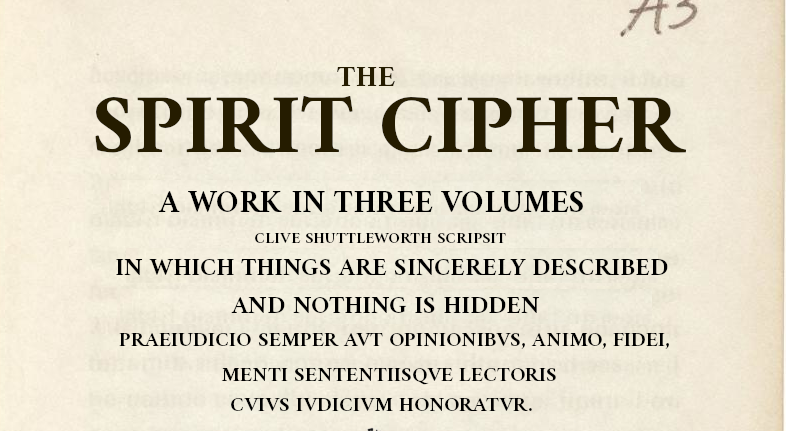
I’ve spent some time thinking about whether to ask him this. Would it be normal for me to ask about this if I were just doing work for my job, not this private research about my ongoing torture?
I think about what kind of response from him would indicate deception about who he is and what he wants from me. If he’s trying to set me up or something—God that sounds so paranoid—what would he say? If he’s innocent, what would he say?
He might deny any knowledge, deny telling me about the arrest, or pretend not to remember.
After a few minutes I see a live call from Finn and open the interface.
“D-man, what’s up. Whoa, you look tired man. You alright?”
“Yeah, yeah I’m ok, just up late fiddling with some sounds. You should never tell anyone they look tired. What if they were having a great day and thought they looked great? Anyway what’s going on?”
“Haha, yeah whatever. You look like shit mate. So yeah, I’m just chillin on a day off, kinda workin though, organizing stuff for a new EP release by the man we call Gryffe. There’s you know, some hype before it releases, and a release party. You’ll be invited by the way. Hey, wanna hear a sample?”
“Yes, of course. I remember Gryffe from the old underground days. He’s come a long way. Are you authorized to release his stuff?”
“Oh, you know Gryffe’s music? That’s cool. Yeah, I can send preview samples at my wise discretion. It’s part of my job at Art Div.”
“Huh. So that’s more than just admin work, Finn. That’s like marketing input.” I joke, “You’re like a music powerbroker.”
“Haha, somewhat true man, somewhat true. But really it’s just that the producers kind of trust my taste about stuff, about music and people.”
“That is amazing Finn, must be fun.”
Finn nods and shrugs like, yeah, I guess.
“So Finn, I wanted to ask you about something. Remember when you mentioned someone getting arrested for accessing contraband info?”
“Uh, no, sorry, I don’t remember that. I talk to a lot of people, so— What were we talking about?”
“It was about heretical material. And let me just make it clear. Researching these kinds of things is part of my job, it’s my profession. I’m legally authorized to research materials dealing with religion, ancient prophecies and whatnot. Even heresy material. I usually don’t need to look at kooky heretical stuff but occasionally it helps. It’s part of the work I do. Ok?”
“You can look at religious contraband materials? Like full-on heresy? Whoa, doesn’t it get like, scary or whatever?”
Thoughts flash quickly in my mind. Is Finn being deceptive?
My mind registers the inconsistency of his response with his previous statements showing at least some knowledge of these things. When we first met, I told him what I do, and he said “you know all that Cabala shit?” or something to that effect. He showed some knowledge. But now he’s playing ignorant. It could still be innocent though.
“Finn, I thought you knew about some of this already. I wouldn’t talk about it otherwise.”
“Well I do not know about that stuff man. Did I say something like that?”
Perhaps at the time he simply thought he was being edgy or sarcastic, which does match his personality. But if he’s playing dumb – why?
So I reassure him that reading about ancient heretical beliefs isn’t “scary” as people might imagine.
“Anyway, don’t worry about it,” I say. “No, it’s not scary. You’d be surprised how, uh, non-scary a lot of the heresy stuff is. It is heretical, but just because of belief systems that are inconsistent with, you know, the truth.”
“Right, the official truth,” Finn says.
I correct him. “The truth.” He looks even more scared now. Good.
I again try to reassure him. “Finn, you can’t get in trouble just for mentioning these things. Anyway some of the esoteric magical stuff, is, well, it’s hard to tell if people really even believed it. Like, quite a bit of it doesn’t seem real, at least to modern readers. And even the stuff that is more serious – I’ve never seen material that’s dangerous just to look at, you know? But if you start doing, like, weird rituals and that kind of thing, then yeah, I’d be worried. I don’t do that stuff at all but I do read about it when I have to.”
Finn is looking at me as if he’s waiting for me to say something else.
“So anyway Finn, yeah, just for my ongoing research and knowledge – remember we were talking about the Unofficial Records forums and some group that tricks people into looking at contraband material and they get arrested?”
“Ok, yeah, right. We were talking about music forums though really.”
“Yeah, you’re right, actually I found some really good music on there. But you mentioned someone getting arrested pretty recently for some heretical material from this super crazy group, ‘the Shunned’…”
“Right, right, ok, yeah. I don’t look at their stuff man. It’s true, a guy got picked up not too long ago. He was just a regular guy.”
“Ok, so it’s true for sure?”
“Well, I heard it second hand, but yeah it seems to be true.”
“Was it a religious text or something like that?”
I see genuine discomfort in Finn’s face. That’s normal. A bit of fear in the eyes, shaking his head no, hands up in a gesture of innocence. “Hey man, I have no idea what it was. I know it really happened and I know it was like, serious heresy or blasphemy or whatever. That’s all I know. I don’t want to know about that shit. You understand, right D? I do not want to know about that stuff.”
“I know Finn, I know you don’t look at that stuff. And I only look at it sometimes when I have to for my work. I was just seeing if I could get more information about that. Sorry kid, I’ll shut up about it now.”
“I gotta remember that about you D, I forget that you’re like some kind of spook when it comes to all that prophecy stuff and whatnot.”
“Yeah, I’m actually a superhero. I just make everyone think that what I do is totally fucking boring, just as a cover.”
We laugh and continue with some chatting about music. I’m discovering that Finn has a real inside track, and even influence, with some of the Art Div music producers who get massive play counts on the pop music feeds. Man, I admire that. I wish I had the ability to make good, complete music. I love doing it but I suck at it.
We end our live chat and I get straight to work.
I am very innocently, in my professional capacity, going to ask Secur-Intel for access to recent reports of arrests for accessing heretical materials. I want to know what the said materials were—for my research.
I am taking a calculated risk and assuming that boldly asking Secur-Intel about this can only be perceived as innocent. Just doing my job. Otherwise, why would I tell them about it?
I‘ll have to go through proper channels. And I’m glad for that as it makes dealing with Secur-Intel less scary. I run it by my manager Seth so I can approach Secur-Intel in an open, sanctioned way. Seth immediately approves.
I send a text to Secur-Intel admin, copied to Seth, with a brief message explaining who I am, what I do, which of course they know already, and what I am working on, which they also know if they want to, along with a brief request for information about recent arrests of people accessing heresy material, specifically asking only to know what the material is so I can obtain it or look it up in Central Data Hub secure archives.
Everything with Secur-Intel has to be weird and scary. Unlike other sent messages, there is no indication that my message is received or looked at by anyone. No acknowledgement. It’s a letdown having to wait for a reply after I summoned the courage to communicate with them. In the hope that they’ll reply soon, I decide to enter the chess server to kill time.
Just as I’m ready to join a game, my display shuts down. I’ve never seen it go blank like this. I’m locked out. After a few seconds a stark white message appears in the middle of the display:
STAND BY FOR SECUR COMMS
DO NOT LEAVE YOUR WORKSTATION
LOOK AT THE DISPLAY, HANDS ON MANUAL INTERFACE, STATE YOUR NAME
“David Stephen.”
A bright point of light scans across the display, then the display flashes brightly for an instant, then it goes blank. A few seconds pass. Then it suddenly flashes again, making me jump. Fuck me. Then another message:
PACKAGE SENT FOR YOUR EXCLUSIVE ACCESS VIA CENTRAL DATA HUB SECURE SERVER
SECURE INFO WARNING LEVEL 4 – UNAUTHORIZED USE STRICTLY PROHIBITED SUBJECT TO CRIMINAL SANCTION PER SUPREME COUNCIL EDICT
SECUR COMMS WILL NOW TERMINATE
The display goes blank again, then my chess game appears. I close out of the chess server.
At least I didn’t have to talk to them.
I immediately log in to my Data Hub secure area. I can see the Secur-Intel message waiting for me.
It confirms the insight I had in my half asleep state. The Black Abbott.
As I open the message, I already know what it’s going to say. The offending materials are The Steganographia, Books I, II and III, written in 1499 by the Benedictine monk and Abbot of the Sponheim Abbey in Germany, Johannes Trithemius (1462–1516). This is the “Black Abbot” whose name I couldn’t remember.
It’s banned by the Holy Supreme Council for its repeated statements of the old heretical conception of God’s relationship with humankind, shown to be untrue by the advent of the Manifested Gods on Earth.
The redacted arrest report describes only one arrest and just the one contraband text, Steganographia. There is no mention of the JFoxe text. But like the JFoxe text, it was posted in the Unofficial Records forums. This unnamed forum user was arrested for looking at it, and it was purged from the feed. Since the arrest, it has not been posted again.
I don’t understand why the poster doesn’t post it again perhaps in some de-centralized way so it would be harder to take down. The “Shunned” seem to be able to post without their location being detected. Why not re-post it with slightly clearer instructions about what it’s supposed to mean?
I have access to the complete Trithemius text and many other such writings, even the heretical ones, in the secure archives.
The Steganographia text is ID’d as “T-1499” in the archives.
I decide it’s safest not to go to the forums and ask JFoxe if he was the one who posted T-1499. It’s safer to simply assume that it was him or an accomplice. I’m also assuming there may be some connection between JFoxe’s manifesto and T-1499. It’s what I expected to find in the arrest record, so it’s making sense.
I review some academic literature about Trithemius.
His work straddled the transition from the Renaissance (1300s to early 1600s) to the Early Modern (1500 to 1800) period. He is credited as the founder of modern cryptography – the science and practice of securing information by transforming readable data (plaintext) into encoded form (ciphertext) so that only parties with the correct key can decode and read it.
He’s remembered among cryptography experts mainly for what they call the “Trithemius cipher”, a system of ciphers based on Trithemius’s “tabula recta”, a 26 by 26 grid of letters made up of the letters of the alphabet. The tabula recta’s letters were arranged starting from A in the first position — what the modern cryptographers would call position zero, A through Z being zero through twenty-five. Moving down through the rows, each row was shifted one letter to the left in each subsequent row, allowing the creation of polyalphabetic substitution ciphers.
Tabula recta-based ciphers evolved over centuries and eventually became much more complex. Often referred to as the “Vigenere cipher”, these more complex tabula recta ciphers were considered unbreakable for 300 years. Eventually they were “cracked” by methods that could reliably solve them. The solution was to invent machines to create ever more complex tabula recta ciphers, which only the machines could solve. Such machines were used in the pre-computer age, even as late as the Second World War.
The computer age quickly made these old ciphers obsolete in critical security applications, as much more complex cryptography methods (and methods of attacking them) were created. But Trithemius’s work and the Vigenere ciphers continued to be taught well into the 21st century as foundational knowledge in computer science and cryptography.
In almost every academic discussion I find, when it comes to Trithemius the focus is on the “Trithemius cipher”—the progressive alphabetical/algorithmic ciphers described in his later work, Polygraphia (1518)—rather than the “steganographic” covertext methods described in Steganographia, T-1499. It’s almost like steganography is a bit neglected in the history.
Trithemius coined the word “steganography”. His steganography wasn’t really cryptography; it was a different, comparatively simple way of concealing secret messages. It was the concealment of messages or writing within other writing or media (”covertext”) that appear innocuous. The sender of a message might write a letter with unremarkable content, but share with the recipient a method, like a key, to discover the plaintext or hidden message within the letter.
The use of steganographic methods to secretly communicate evolved over the centuries to include more complex ideas, such as hiding messages within the pixels of innocuous images, or within audio files or other media. One main strength of these methods is that an attacker would have to suspect something is hidden in the covertext in order to examine it.
The thing that made Steganographia T-1499 and Trithemius famous—or infamous—is the surprising method it uses for teaching how to conceal messages within other messages.